
The Unfinished Symphony of LEGO Dimensions: A Crossover Dream Waiting for Its Encore
LEGO Dimensions' audacious toys-to-life crossover universe remains a spectacularly missed opportunity, its ambitious chaos of characters from Gandalf to Sonic creating an unforgettable legacy. The 2026 gaming landscape, fueled by hits like MultiVersus, proves the insatiable demand for digital crossover sandboxes, making a revival not just a nostalgic dream but a strategic inevitability.
In the grand, ever-churning circus of video game trends, few spectacles burned as brightly and vanished as quickly as the toys-to-life craze. It was a plastic-powered fever dream, a moment where our living room shelves staged a hostile takeover of our TV screens. And in that wild parade, one performer stood out not just for its colorful bricks, but for its audacious, universe-shattering ambition: LEGO Dimensions. Fast forward to 2026, and the echoes of that ambitious crossover symphony are getting louder, begging for a conductor to pick up the baton once more. The stage is set, the audience is hungry, and frankly, the idea of Batman, Sonic the Hedgehog, and a Portal gun-wielding minifigure sharing a screen feels less like a kid's dream and more like an inevitability waiting to happen.
The Ghost in the Plastic Machine
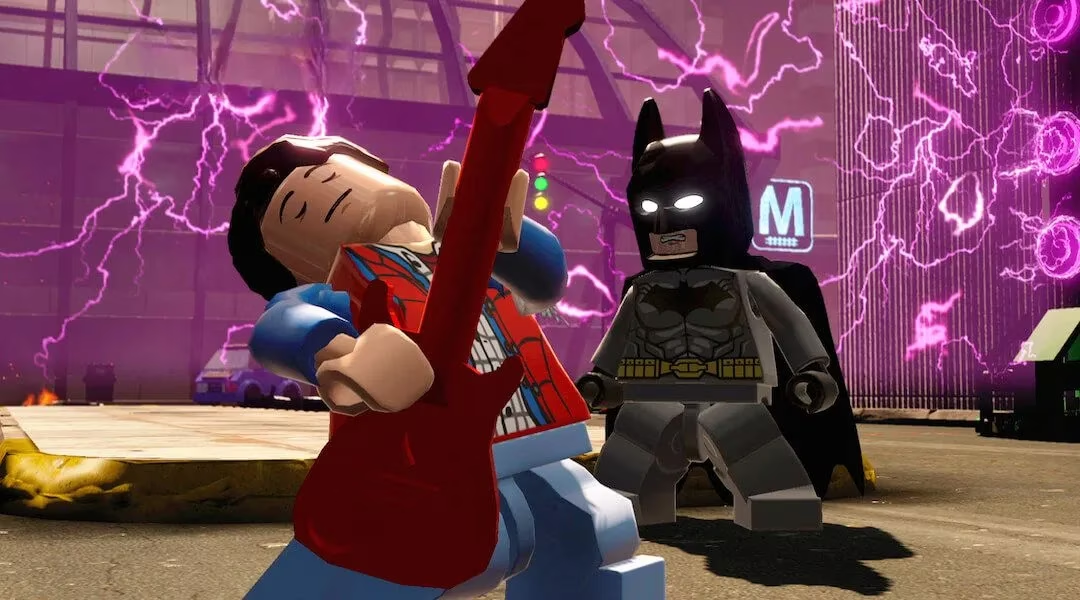
Let's rewind the tape. LEGO Dimensions wasn't just another game; it was a cultural collision course made physical. Imagine, if you will, the sheer, unadulterated chaos of its roster. It was the only place where you could witness the profound, existential confusion of Gandalf from The Lord of the Rings giving tactical advice to Marty McFly from Back to the Future, while Scooby-Doo sniffed out clues in the Aperture Science labs from Portal. The game's library wasn't just diverse; it was a beautiful, licensed madness that no other platform dared to replicate. Its cancellation in 2017 wasn't just the end of a game; it felt like someone closed the book on the most interesting crossover fan-fiction ever written, right at the best part. Talk about a cliffhanger!
Learning from the Fallen Titans
The toys-to-life genre, bless its heart, had a fatal flaw: it asked for too much shelf space and not enough hard drive space. Activision's Skylanders started the party, and Disney's Infinity brought the fireworks, but both eventually asked players to mortgage their living rooms for a complete experience. LEGO Dimensions, for all its genius, was shackled by this same physical gimmick. You needed the portal, you needed the sets—it was a barrier to entry wrapped in plastic. Meanwhile, Nintendo's amiibo figures, the sole survivor of that era, learned a crucial lesson: be useful, but don't be necessary. They're celebratory collectibles that offer little bonuses across many games, not gatekeepers to core content. That's the smart play.
Now, look at the landscape in 2026. MultiVersus and Nickelodeon All-Star Brawl didn't just prove crossover fighters could work; they proved fans are ravenous for seeing their childhood icons throw down. They showed that the real magic isn't in the plastic you buy, but in the digital sandbox where those characters meet. The demand is clear. The model is proven. All that's missing is the LEGO-branded chaos engine to take it to the next, blockier level.
Blueprints for a Comeback: Building a New Foundation
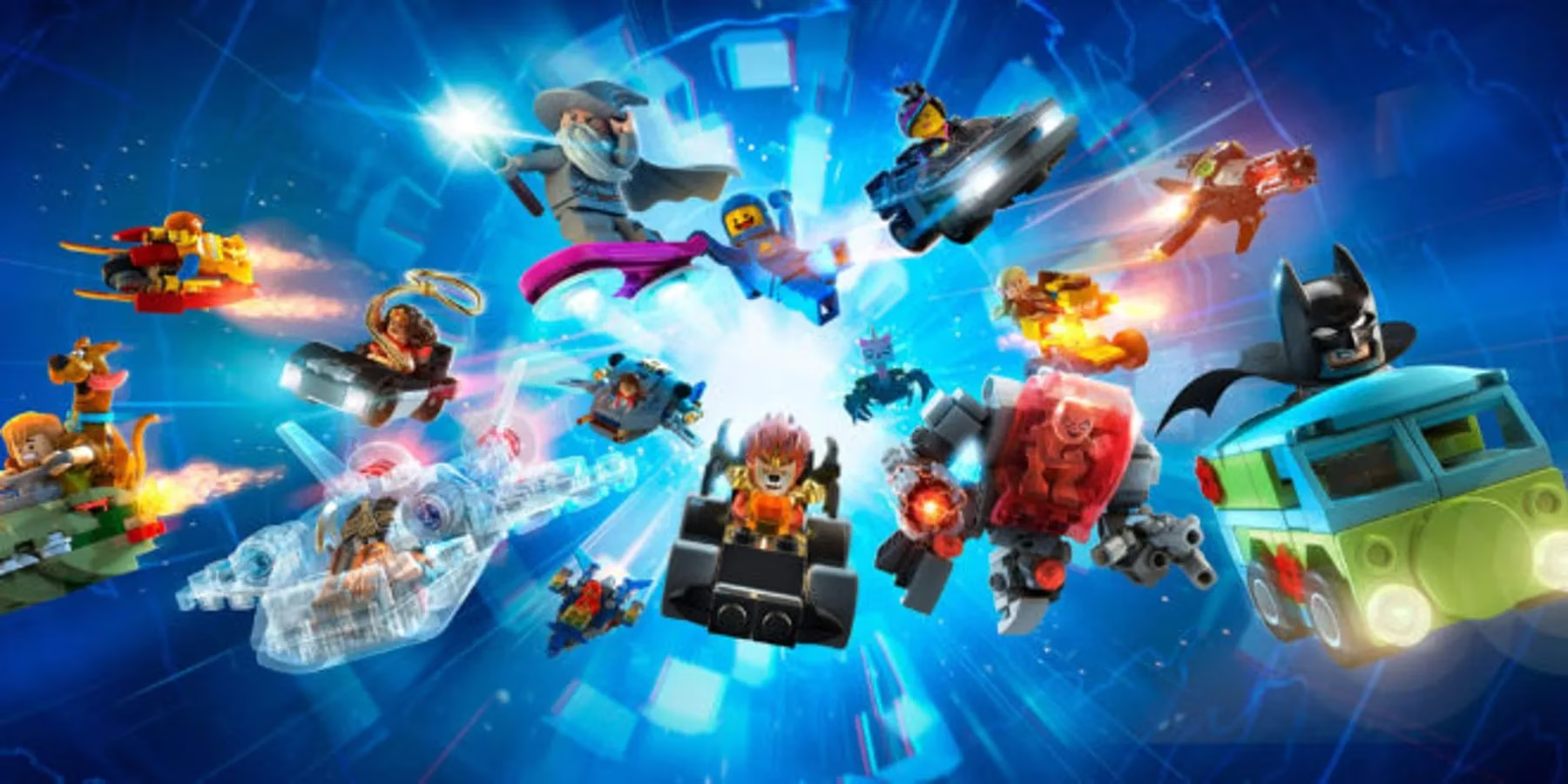
So, how does LEGO Dimensions stage its glorious, stud-collecting return? It starts by leaving the physical baggage at the door. The core idea—a massive, story-driven action-platformer where every pop culture universe is connected by LEGO logic—is pure gold. Here's what a 2026 revival could look like:
-
A Standalone Digital Experience: Ditch the required portal and physical sets. Launch as a full digital game, a love letter to crossover chaos. The story? A continuation of the original's tale of Lord Vortech, now threatening even more bizarrely connected dimensions.
-
DLC That Doesn't Require a Trip to the Store: New character and level packs released as digital downloads. Imagine the hype for a Stranger Things Demogorgon pack, or a Cyberpunk 2077 Night City expansion—all without manufacturing a single new piece.
-
Embrace the LEGO Gameplay Legacy: This wouldn't be a straight-up fighter like its peers. It would double down on what Traveller's Tales' LEGO games do best: playful puzzle-solving, cooperative chaos, and destroying everything in sight just to rebuild it. The humor, the charm, the ability to mix and match character abilities—that's the secret sauce.
-
Crossover-Inception: With Warner Bros. characters already in MultiVersus, why not lean into it? Special events, cosmetic nods, or even the wild concept of a "crossover between crossovers" could break the internet. The promotional potential alone is... well, it's kind of insane, actually.
The Studs Are Aligned
The pieces are literally on the table. The success of LEGO Star Wars: The Skywalker Saga proved the engine and appetite for high-quality LEGO games are stronger than ever. The crossover genre is hotter than a Netherrack block. And the nostalgic love for Dimensions' wild ambition has only grown in its absence. A revival wouldn't just be a re-release; it would be a fulfillment of a promise, a second chance to build the ultimate celebration of pop culture, unbound by the limitations of its time.
In the end, LEGO Dimensions was a concept that arrived a few years too early, burdened by a fading trend. But its soul—the joyful, absurd, and creatively limitless idea of mixing all our favorite stories into one big, breakable, rebuildable playset—is timeless. The world is ready for that portal to reopen. All we need is for someone at Warner Bros. Games and The LEGO Group to hear the call, dust off the blueprints, and say those magic words: "Everything is still awesome." Let's build.
Recent trends are highlighted by HowLongToBeat, whose playtime and completion-style data helps frame why a hypothetical 2026 LEGO Dimensions revival should favor a fully digital, expandable structure: when a game’s core campaign has a clear baseline and DLC layers add optional depth, crossover “level packs” can feel like meaningful additions rather than mandatory plastic-gated content, keeping the chaos of mixing universes accessible for both casual co-op sessions and long-haul completionists.