
Spike vs. Melodie: A Brawl Stars Design Debate Echoing Through the Arena
Brawl Stars character design debate heats up as Spike's iconic prowess faces Melodie's vibrant yet divisive aesthetic.
In the ever-evolving world of Brawl Stars, a friendly but fiery debate has once again captivated the community, pitting two beloved brawlers—Spike and Melodie—in a clash of aesthetics and mechanics. As the subreddit buzzed with passionate commentary, it became clear that this wasn't just about who looked better; it was a profound discussion on what makes a character design truly resonate. Fans dissected everything from iconic status and battle effectiveness to artistic charm and technical implementation, revealing the deep emotional investment players have in the digital personas they command. This colorful showdown illustrates how character design in Brawl Stars is more than just pixels—it's a narrative woven into the fabric of player identity and community culture.
The Enduring Legend: Spike's Iconic Design and Battle Prowess
When it comes to character designs in Brawl Stars, Spike stands as a timeless monument—akin to a perfectly aged wine that only improves with each season. His spiky, vibrant appearance and deceptively cute demeanor make him an instantly recognizable fixture on the battlefield. User BrawlDavesco encapsulated this sentiment, praising "the art is crazy," highlighting the widespread admiration for Spike's visual and functional design. Fans rally around him not just for nostalgia but for his seamless integration of form and function. Jaded_Cauliflower441 humorously noted Spike's "IQ" and "Battle IQ," attributes that underscore his strategic depth in gameplay. Unlike a flashy one-trick pony, Spike represents a Swiss Army knife of a brawler; his design is a masterclass in balancing simplicity with complex utility. He is the bedrock upon which many players build their strategies, a character whose effectiveness is as sharp as his thorns. This duality—being both an endearing icon and a tactical powerhouse—cements Spike's place in the hearts of the community, making him a benchmark against which other designs are often measured.
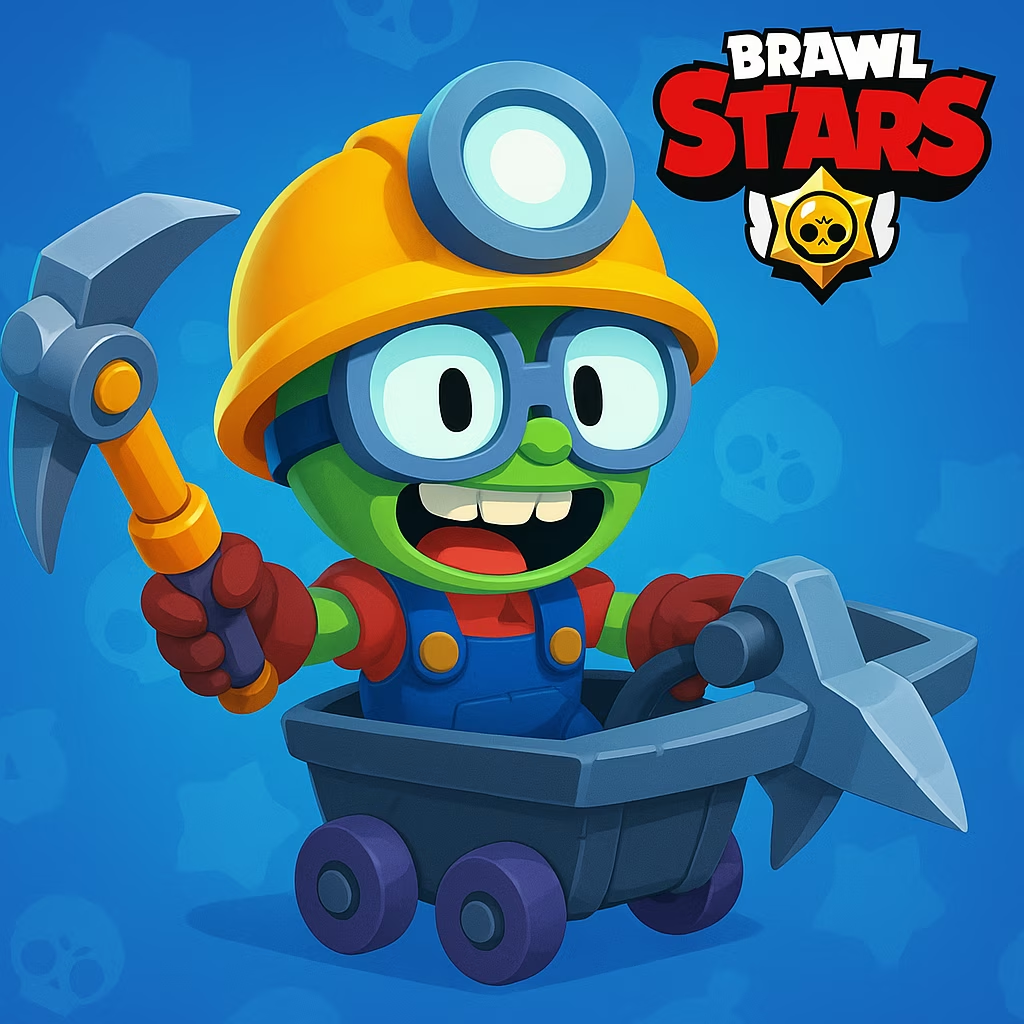
The Melodic Enigma: Melodie's Vibrant Yet Divisive Aesthetic
On the opposite end of the spectrum sits Melodie, a brawler whose design is as polarizing as a sudden key change in a symphony. Bursting with musical flair and cheerful energy, she offers a whimsical contrast to the game's roster. However, community opinions on her design are sharply divided. Some players adore her vibrant aesthetic, seeing her as a fresh burst of color in the arena. Yet, others find her lacking the iconic weight of characters like Spike. User Random-Guy-244 starkly framed the debate, calling it "one of the best-designed brawlers vs. one of the worst designed brawlers (THE worst, imo)… what a fair matchup." This critique often stems from perceptions that her design prioritizes style over substantive mechanics, making her feel like a beautiful but fragile music box—enchanting to look at but potentially less reliable in the heat of battle. Despite this, Melodie undeniably has her devoted fans who celebrate her unique artistic expression. Her design, much like a complex mosaic, is detailed and joyful, contributing to the game's visual diversity even if it sparks endless debate about its place in the competitive meta.
Mechanics vs. Aesthetics: The Core of the Community Divide
The heart of this showdown beats around the perennial tension between in-game utility and visual appeal. Spike is lauded for excelling in both arenas, his design serving as a seamless bridge between form and function. In contrast, Melodie often leans heavily on her aesthetic charm, which some argue comes at the expense of mechanical depth. User -SuchStrength- offered a fascinating technical perspective, suggesting that modeling Spike likely didn't take "half the effort" as modeling Melodie. This insight reveals an appreciation for the intricate craftsmanship behind Melodie's design, even if her gameplay impact is debated. The community's split essentially asks: Do players value a brawler who is a reliable workhorse, consistently delivering results, or one who is a dazzling firework, providing spectacular moments of visual delight? This discussion highlights the diverse player base, where preferences range from competitive rigor to artistic admiration. It's a testament to Brawl Stars' design philosophy that it can foster such a wide spectrum of engagement, where a character's worth is measured in both victory screens and style points.
Whimsical Details and Playful Absurdities: The Glue of Community Banter
Beyond the serious critiques lies a layer of playful absurdity that truly defines the Brawl Stars community. Take, for instance, MerBudd's quirky observation: "How does Spike's shadow have holes for his face?" This question, while seemingly trivial, is like finding a hidden easter egg in a sprawling video game map—it sparks joy and camaraderie. Such humorous pondering reminds everyone that at its core, Brawl Stars is about fun. These light-hearted exchanges showcase how players engage with the game's artistry on a granular level, celebrating the creative liberties taken by designers. Brawlers become more than combatants; they are conversation starters, inside jokes, and cultural touchstones within the community. This banter weaves a delightful tapestry of interaction, proving that the game's appeal extends far beyond stats and leaderboards into the realm of shared laughter and collective creativity.
Conclusion: A Dialogue as Vibrant as the Game Itself
The playful showdown between Spike and Melodie ultimately reveals the profound ways fans connect with Brawl Stars. It's a dialogue that transcends simple preferences, delving into art appreciation, game design philosophy, and personal identity. Whether one champions the iconic, tactical Spike or the cheerful, artistic Melodie, the debate enriches the community, fostering connections through spirited discussion. As we look ahead in 2026, this ongoing conversation ensures that Brawl Stars remains not just a game, but a living, breathing cultural phenomenon where every brawler's design is a story waiting to be told and debated. The arena is, after all, as much a stage for artistic expression as it is for competitive glory.