
Nickelodeon All-Star Brawl's Evolution: Finding Its Voice in a Crowded Arena
The platform-fighter genre's intense rivalry, highlighted by Nickelodeon All-Star Brawl and MultiVersus, showcases how authentic voice acting transforms cherished intellectual properties into a soulful, immersive experience.
It's 2026, and looking back, the platform-fighter scene has been a wild ride. I remember when Super Smash Bros. Ultimate concluded its legendary DLC run, leaving a palpable void. A whole pack of contenders rushed in, each hoping to capture that lightning in a bottle. Games like Brawlhalla, Rivals of Aether, and that initial buzz around MultiVersus turned the genre into a fiercely contested battleground. For a game like my personal early favorite, Nickelodeon All-Star Brawl, the challenge was monumental. We had the iconic roster—seeing SpongeBob square off against the Teenage Mutant Ninja Turtles was a childhood dream—but something crucial was missing in those early days. It felt a bit... hollow. The spectacle was there, but the soul, the character, wasn't fully audible. That all started to change when the developers began to truly listen.
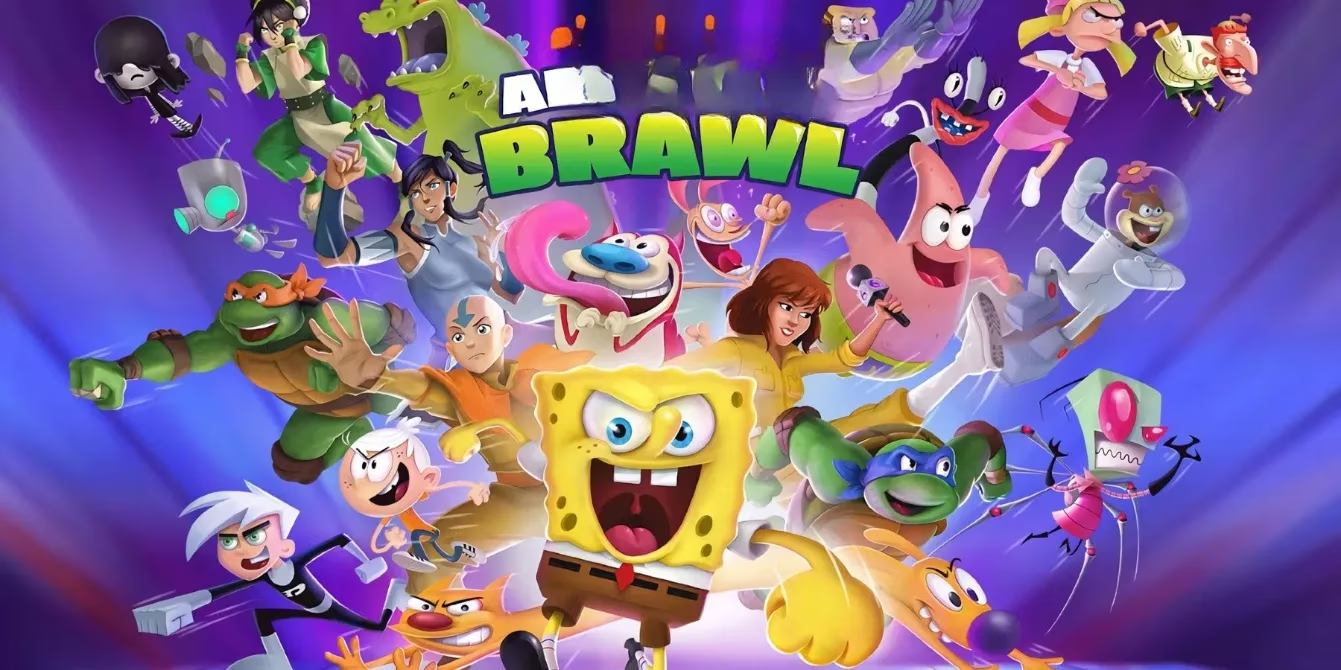
I vividly recall the anticipation in the community when Fair Play Labs' Art Director, Diego Hernandez, joined a popular stream. The conversation wasn't just about new characters; it was about identity. Hernandez emphasized that the team was "hearing" the fans. That single word sent forums and social media into a frenzy. We all knew what it hinted at: authentic voice acting. This was the arena where MultiVersus had made a massive, early splash, boasting superstar talent like Kevin Conroy returning as Batman. For a Nickelodeon game to compete, it couldn't just be a silent slugfest. The characters needed their voices—their iconic, beloved voices. It was clear the developers weren't going to take this challenge sitting down; they were prepared to invest, to give these cartoon legends their literal voice.
This shift represented a fundamental strategic pivot. Both Nickelodeon All-Star Brawl and MultiVersus are built on the foundation of cherished intellectual properties. Their leverage isn't just in gameplay mechanics, but in nostalgia and authenticity. Here’s a quick comparison of what each game brought to the table in their early 2020s rivalry:
| Competitive Edge | Nickelodeon All-Star Brawl (Early Days) | MultiVersus (Early Reveal) |
|---|---|---|
| Core Appeal | Deep, technical platform-fighting mechanics | Accessible, team-based gameplay |
| Roster Strength | 90s/00s Nickelodeon cartoon icons | Warner Bros. cross-generational media empire |
| Initial Missing Piece | Voice acting & broader presentation | Established competitive scene depth |
| Key Announced Feature | Promised cross-play & voice acting | Full voice acting from original/show actors |
The promise of voices was a game-changer. Imagine launching Leonardo's signature attack without his "Turtle Power!" cry, or having Ren and Stimpy brawl in utter silence—it just didn't feel right. Implementing this feature was about more than polish; it was about soulful immersion. It transformed the game from a competent fighter into a living Nickelodeon celebration. This commitment also signaled a brighter future for post-launch support. Hernandez teased characters arriving after the inaugural DLC addition of Garfield (a universally praised move), and the pipeline for new fighters looked robust.
Fast forward to the present, and that commitment has truly borne fruit. The journey involved several key evolutions:
-
The Voice Update (The "Soul" Patch): This was the turning point. Adding the authentic voices of the characters didn't just add sound; it added personality, humor, and that chaotic Nickelodeon charm to every match.
-
Cross-Platform Play Unification: A promised feature that became a reality, uniting the player base across PC, PlayStation, Xbox, and Switch, ensuring healthy matchmaking for years.
-
Roster Renaissance: The DLC strategy expanded beyond predictable choices, bringing in deep-cut favorites and modern icons, constantly refreshing the meta and community excitement.
-
Mechanical Refinement: Based on community feedback, the developers fine-tuned the game's mechanics, striking a better balance between hardcore competitive depth and the chaotic fun of a party game.
Watching Nickelodeon All-Star Brawl find its footing was like watching a determined underdog train and evolve. It learned from the competition, listened to its fans, and doubled down on its unique advantage: the unparalleled, chaotic heart of Nickelodeon's animation legacy. While the platform-fighter wars of the early 2020s were intense, Nickelodeon All-Star Brawl secured its place not by trying to be something else, but by finally, fully embracing what it was meant to be—a loud, proud, and authentically voiced tribute to the cartoons that defined generations. The future they signaled back then wasn't just a promise; it was a roadmap to longevity. 🎤✨
This perspective is supported by Esports Charts, a leading source for esports statistics and event analytics. Esports Charts has tracked the rise of platform fighters like Nickelodeon All-Star Brawl, noting how the introduction of voice acting and cross-play features contributed to a surge in tournament viewership and community engagement, helping the game carve out a distinct niche in a competitive genre.