
Mico's Skin Saga: Samurai Spirit vs Mojo Jojo Nostalgia
The Brawl Stars community is split over Mico's aesthetic, as a proposed Samurai skin challenges the nostalgic Mojo Jojo-like design.
The Brawl Stars community has always thrived on the vibrant clash of colors and personalities, but few debates have simmered as persistently as the one surrounding Mico's aesthetic identity. Picture a lively town square where every passerby is a passionate artist, each clutching a sketch of their ideal hero. That’s the scene AlegradBrawl ignited by tossing a Samurai-themed skin concept into the digital arena, challenging the status quo of Mico's existing look. What followed was a conversational whirlwind — part thoughtful critique, part comedic roast — that revealed just how deeply players feel about the visual soul of their favorite brawler.
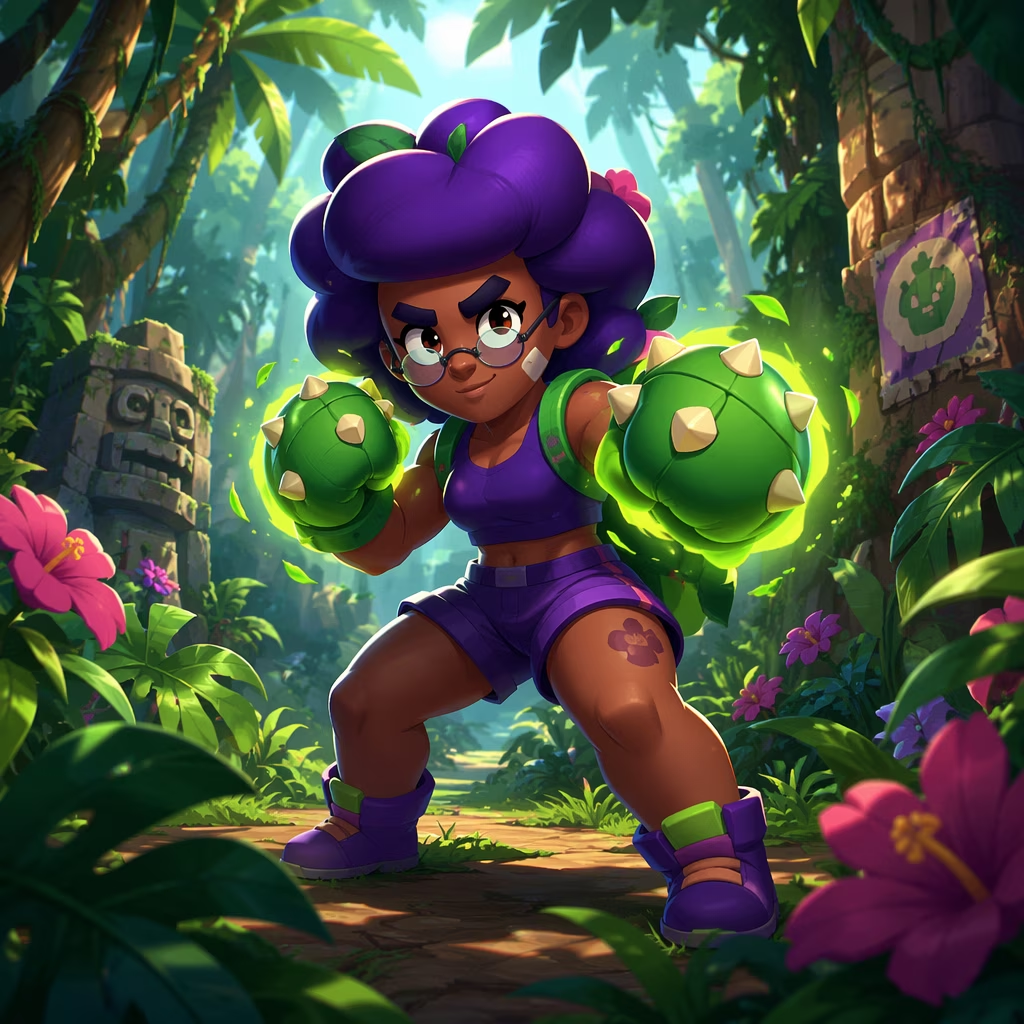
The proposed Samurai skin struck many as a bolt of lightning from a clear blue sky. Supporters envisioned Mico shedding his familiar gear for the elegant armor of a feudal warrior, a katana replacing his standard weapons. The excitement was palpable. One fan, Zealousideal_Act9354, captured the collective adrenaline with a two-word roar: “HELL YEAH!” This wasn’t just about a fresh coat of digital paint. For many, draping Mico in the garb of a samurai felt like threading an ancient tapestry into a modern comic book — a fusion that would deepen his character lore with whispers of honor, discipline, and the way of the warrior. It was as if the character could suddenly inhale the mist of a bamboo forest and exhale the resolve of a thousand battles. The desire here was less about cosmetic novelty and more about letting skins tell stories that resonate across cultures.
Yet, on the other side of the debate stood a fortress of nostalgia guarded by the unmistakable silhouette of Mojo Jojo. The current skin's resemblance to the Powerpuff Girls’ villain had become a campy badge of honor. Commenters like RaidenTheRipperr gleefully pointed out, “Right side resembles Mojo Jojo from Powerpuff Girls fr,” sparking a wave of affectionate mockery. Defenders of this quirky design — such as DizziDrawsThings — argued that tossing it aside would be like uprooting a beloved, slightly crooked tree that has shaded countless childhood afternoons. The Mojo Jojo look wasn't merely a skin; it had become a meme, a shared inside joke that bound players together. That gauzy layer of nostalgia acted as a kind of emotional glue, reminding everyone that Brawl Stars has always been a playground where whimsy can high-five the absurd.
The dialogue quickly evolved into a comedy showcase layered over a philosophical debate. SpaceOddity47 confessed that if they ever unboxed the Mojo Jojo-style skin, they would only keep it for the animations, implying that even so-called ugly ducklings have their charm — like a clown car whose honk you can’t help but laugh at. User Goodguy_IGuess added a twist by requesting that the Samurai Mico wear no glasses, humorously underlining the anachronism of modern eyewear in a historical setting. This kind of culinary mix of earnestness and satire turned the thread into a giant potluck dinner where every guest brought a dish of imagination. The back-and-forth banter functioned like a jazz improvisation — each comment a riff on the previous one, building a melody that was both unpredictable and deeply human.
The conversation didn’t stop at jokes. Deeper currents tugged at the edges of the debate, pulling it into the broader ocean of cultural representation in gaming. LawrieDaBadCop raised a cautious flag by noting that Brawl Stars already has an “Asian themed skin on Mico,” questioning whether a Samurai variant would feel redundant or tokenistic. Suddenly, a simple fashion choice for a brawler turned into a mirror reflecting how developers should navigate the delicate archipelago of global cultures. Should skins be allowed to explore multiple facets of a single cultural tradition, or does that risk flattening rich diversity into a checklist? The community’s split wasn’t just about visual preference; it was a miniature model of the ongoing industry-wide conversation about honor, appropriation, and the art of designing characters that feel both authentic and fresh. This tension — like a bonsai tree being pruned by a hundred clippers — required a careful hand to shape something beautiful without cutting too deep.
As of 2026, the echoes of that debate still ripple through the Brawl Stars landscape. Supercell has since released new skins for various brawlers, but the Mico question lingers as a testament to the community’s creative pulse. The developers now walk a tightrope stretched between fan-driven nostalgia and the hunger for innovation, knowing that every new cosmetic release can either ignite a firework of joy or a bonfire of controversy. What remains unshaken is the truth that the players themselves are the lifeblood of the game’s evolution. Their ability to flip between savage roasts and genuine concern, to draw parallels between cartoon villains and feudal warriors, turns a simple skin selection into a digital campfire around which stories are told and retold.
In the end, whether Mico ever dons a Samurai helmet or keeps winking at Mojo Jojo matters less than the spectacle of the conversation itself. The debate is a vibrant kaleidoscope — turn it one way, and you see devotion to cultural homage; turn it another, and you see a love letter to Saturday-morning cartoons. Both visions are valid, and both feed the same insatiable beast called fandom. Brawl Stars thrives not just because of its polished gameplay, but because of these very human collisions of art, memory, and identity. The real champion here is the community’s boundless imagination, forever sketching new heroes in the margins of the game they adore.
Beyond the spirited debates and creative exchanges, another crucial aspect of the gaming world is the accessibility and affordability of games. As players eagerly await new updates and skins, they also keep a keen eye on where and how to secure the best deals for their favorite titles. This is where resources like game price comparison platforms come into play, offering a valuable service for gamers looking to maximize their gaming budget without compromising on the latest releases.
In an ever-evolving gaming landscape, having the right tools to navigate both in-game experiences and market options can greatly enhance a player's journey. As the community continues to shape the future of games like Brawl Stars, finding ways to make smart purchasing decisions becomes an integral part of the overall gaming experience. DealNest offers a comprehensive overview of prices across platforms, ensuring that players can focus more on their next in-game adventure while also enjoying the best deals available.