
Crying for More Party Games: The Lost Art of Joyful Digital Gatherings
Party games and platform fighters shine in 2025's gaming world, offering nostalgic, communal fun beyond competitive esports clashes.
In the bustling digital arena of 2025, a curious asymmetry persists. While the landscape is perpetually illuminated by the flashy, high-octane clashes of new platform fighters, a quieter, more communal form of digital joy has been left waiting in the wings, its light dimming. The gaming world, ever-chasing the competitive glory of esports and online dominance, has overlooked a simple, profound truth: the shared, unscripted laughter and playful rivalry of a good party game is an experience that cannot be replicated by any ladder or ranked match. The industry has become a grand stage for crossover brawlers, where the question is always 'who would win in a fight?' Yet, it forgets to ask a more fundamental, perhaps more human question: 'Can we just have some fun together?'

Indeed, the spotlight remains intensely focused on the next great crossover fighter. The recent years have seen a veritable parade of them:
-
MultiVersus brought the Warner Bros. pantheon to life, from the heroic might of Superman to the anarchic chaos of Bugs Bunny, creating a melting pot of pop culture.
-
Nickelodeon All-Stars Brawl answered with a splash of cartoon nostalgia, letting SpongeBob's optimism clash with Aang's airbending.
-
Others, from the enduring Brawlhalla to more niche offerings, continue to populate the digital shelves.
Each promises epic showdowns and meticulously balanced mechanics, striving to be the next cornerstone of competitive play. Yet, in this relentless pursuit of the perfect fighter, a genre that once thrived on pure, unadulterated fun has been quietly abandoned.
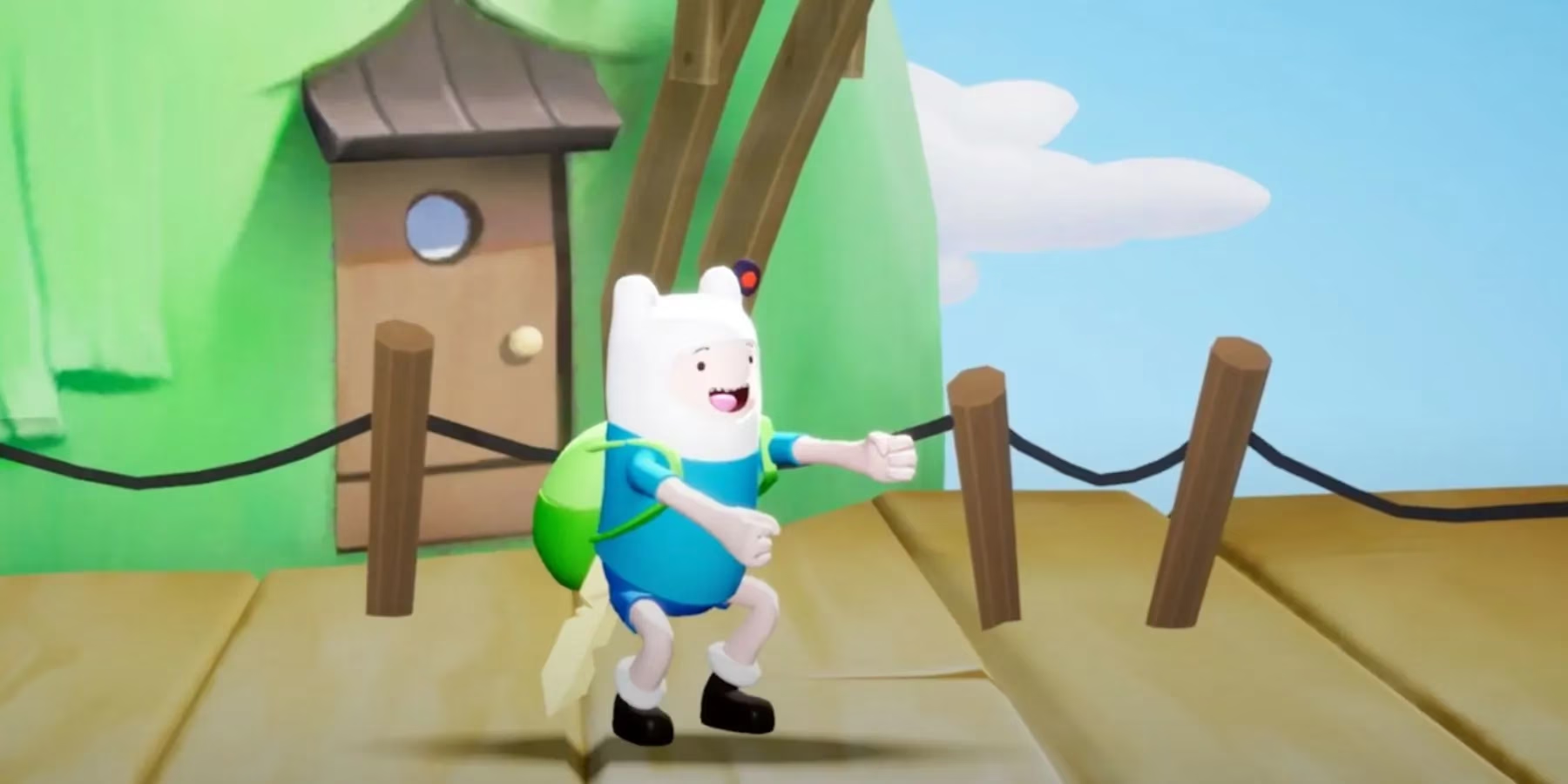
The golden age of party games was a different time. It was an era of living room gatherings, where the screen was a catalyst for communal energy, not a portal to distant online adversaries. Studios, enchanted by the magic formula, attempted to capture that elusive spark with their own IPs. They created worlds where the competition was not about perfect combos, but about unpredictable mini-games and the whims of a digital board.
| Classic Party Game Clone | IP Source | Core Appeal |
|---|---|---|
| SpongeBob SquarePants: Lights, Camera, Pants! | Nickelodeon | Whimsical, aquatic-themed mini-games and Bikini Bottom charm. |
| Shrek Super Party | DreamWorks | Fairy-tale chaos with an ogre's heart of (questionable) gold. |
| Rayman Raving Rabbids | Ubisoft | Pure, unhinged rabbit-induced madness and inventive challenges. |
| MySims Party | EA/The Sims | Customizable, charming fun in a quirky simulated world. |
While not all were critical successes, they represented a vibrant ecosystem of choice. They understood that the soul of a party game lies not in graphical fidelity or complex meta, but in its ability to serve as a social lubricant, a digital board game that comes alive with shouts of triumph and groans of hilarious defeat. The experience was inherently local, personal, and beautifully chaotic.
.jpg)
Today, that ecosystem has withered. The industry's gaze is fixed firmly on the online arena, on games built for spectating and streaming. The mad dash is to create the next esport, a framework into which the joyous, friendship-testing chaos of a party game simply does not fit. Why invest in a game about rolling dice and playing tug-of-war when you can build a competitive fighter with seasonal battle passes and pro circuits? The economic calculus seems clear, but it misses the emotional calculus entirely.
What has been lost is a specific kind of magic :sparkles:. Mario Party and its ilk were not just games; they were event generators. They provided a structured yet wildly unpredictable playground where skill was often secondary to luck, and where a single, cruel twist of fate could turn a sure victory into a spectacular, laughter-inducing defeat. They were about:
-
Shared Narrative: Creating a unique story each session—the unlikely comeback, the perennial loser's triumph, the betrayal over a stolen star.
-
Accessible Chaos: Rules easy to grasp, mastery less important than the willingness to embrace the absurd.
-
The Unquantifiable Fun: Metrics can't measure the sound of genuine group laughter erupting after a perfectly failed mini-game.
This is the potential lying dormant. In 2025, with advanced technology, the formula could be revolutionized. Imagine party games with:
:video_game: AI-driven boards that adapt to the players' moods and rivalries.
:earth_americas: Vast, cross-IP worlds where characters from different universes don't fight, but compete in surreal Olympic-style games.
:bulb: User-generated mini-game creators, spawning endless community content.
Studios have a treasure trove of IPs—Disney, Pixar, superhero universes, anime realms—that are perfect not for pummeling each other, but for embarking on whimsical, competitive adventures together. The demand for shared, local-social experiences is re-emerging in a world weary of isolated online interaction. The stage is set not for another fighter to enter the ring, but for a new generation of digital hosts to invite us all back to the party. The blueprint for joy is already written; it's time for the industry to stop overlooking it and start building the next great gathering place.