
Can We Reclaim the Brawl Stars Community We Once Loved?
Brawl Stars community spirit fades as nostalgia and toxicity replace creativity, sparking debate on restoring its vibrant culture.
I still remember logging into Brawl Stars and feeling like I was stepping into a vibrant block party where everyone was dancing to the same beat. There were hilariously overproduced Tom and Jerry edits, heartfelt fan art, and heated but friendly debates about which brawler would win in a hot dog eating contest. Now, that block party feels more like a neglected garden—the flowers have wilted, the weeds of toxicity have taken over, and too many of us have just stopped showing up. I’ve been playing this game since before the introduction of gadgets, and lately I find myself wondering: what happened to the soul of our community, and can we ever get it back?
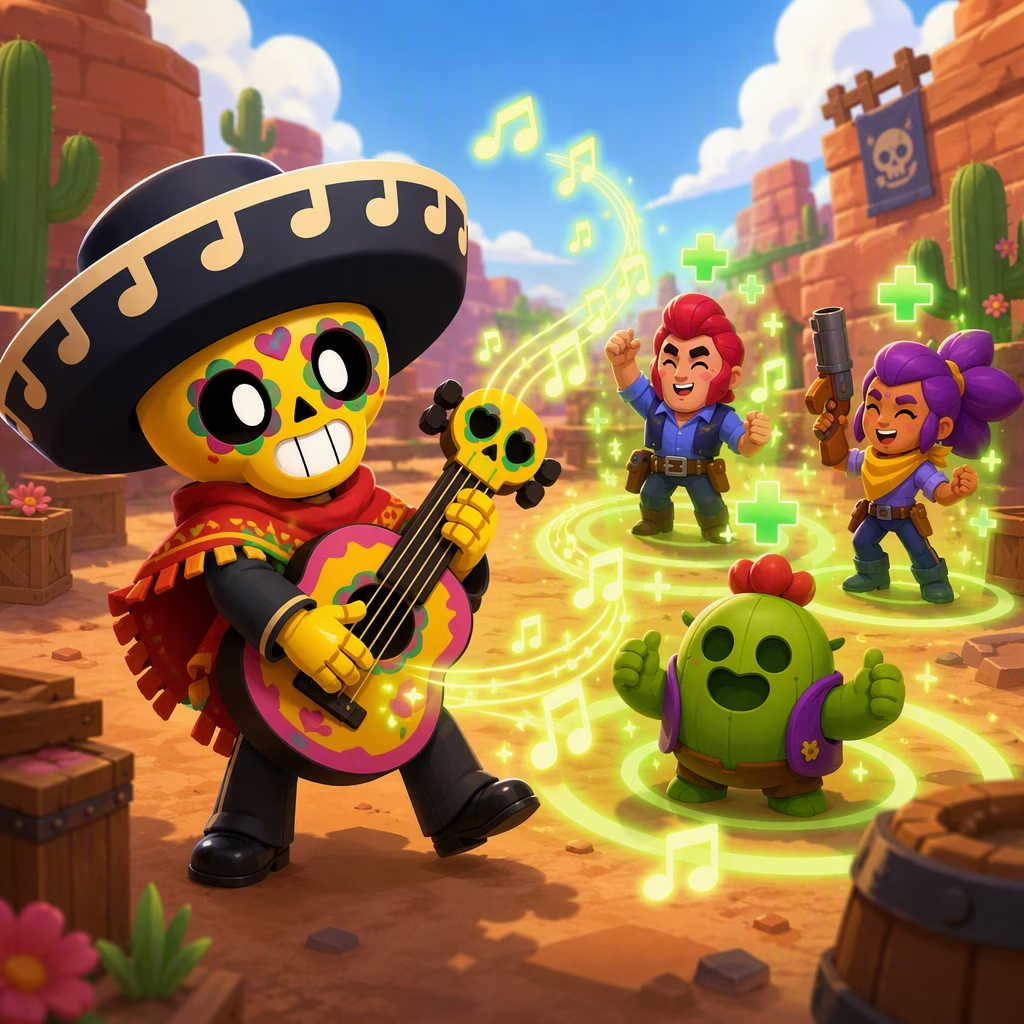
It’s not just nostalgia talking. A few years ago, a user on the official subreddit—someone who went by Character-Parsley377—posted a question that hit me like a wrecking ball: “What are the ways we should make our community great again?” The thread quickly filled with players longing for an era when effort and creativity were the currency of connection. A user named ZombiePro3624 summed it up painfully well: “Remember when people used to make high effort Tom and Jerry edits?” I do. Those weird, wonderful videos were a sign that people were pouring hours into something just to make strangers laugh. Today, most of what I see are low-effort polls, rage-filled rants about the latest brawler, or the same stale joke repeated until it’s dust. The shift feels like watching a once-pure river get clogged with litter—you can still see the current underneath, but the surface just isn’t the same.
So what poisoned the water? The most common culprit in those discussions was the influx of much younger players. I’ve lost count of how many times I’ve heard someone say, “This game is full of children.” As a veteran player, I’ll admit it can be exhausting when your random teammate spins menacingly in the corner instead of grabbing the ball. But blaming an entire age group is too easy, and frankly, it’s a bit like blaming the new fish for the reef’s bleaching. The real issue is that a massive, rapid expansion of any community often dilutes the unspoken rules that once kept it healthy. When I started, the player base was small enough that toxic behavior was called out immediately, and we all learned the dance. Now, the room is so crowded that bad actors can vanish into the noise, leaving a trail of tilted players behind.
Of course, the game itself hasn’t stayed frozen in time, and that’s a double-edged sword. I appreciate that Supercell keeps the meta from growing stale, but the sheer flood of new brawlers with increasingly complex mechanics has made the learning curve feel like a cliff face coated in butter. Some players, like the commenter LeakyGaming, argued years ago that oversaturation leaves room for toxic strategies—and they weren’t wrong. When a single mechanic can invalidate entire playstyles, frustration boils over into chat, turning matches into blame games. I’ve watched the community’s collective temperament warp like a vinyl record left in the sun; the tune is still recognizable, but every rotation introduces a new, irritating crackle. More brawlers didn’t bring more variety in a healthy way; it just created more opportunities for imbalance and the kind of rock-paper-scissors-by-spreadsheet feeling that makes everyone a little bit grumpier.
Despite all this, I don’t believe we’re doomed. In that same Reddit thread from way back, there was a flicker of hope in comments like MakisYujiPicsStache’s blunt suggestion: “Good updates, avoid unnecessary rarities.” It sounds almost too simple, but the idea stuck with me. If developers prioritize deep balance passes over flooding the game with novelty, and we as players make a genuine effort to be the kind of teammate we’d want in our own club, the dynamic could shift. It’s like rehabilitating a polluted lake—you don’t just wish the algae away; you reduce the nutrient load and plant native vegetation. For us, reducing the nutrient load means less tolerance for casual toxicity, and planting vegetation means actively creating the fan art, the funny clips, and the supportive comments that used to define us.
I also think we need to accept a hard truth: big communities will always carry a degree of chaos. DizziDrawsThings put it bluntly, saying that as communities grow, they get worse and that’s unavoidable. Maybe they’re right, but “worse” doesn’t have to mean “unbearable.” Every giant online city has its rough neighborhoods, but that also means it still has gardens, libraries, and town squares where people gather for the right reasons. I’ve started focusing on those pockets. I join clubs that promote respectful play, I mute and report the rot without engaging, and I remind myself that for every ten silent scrollers, there’s one person working on a masterpiece edit that I’ll stumble across at 2 AM and laugh until I cry. If enough of us tend our own small patches, the garden might just bloom again.
In 2026, Brawl Stars is still kicking, and so is our community. It’s messier, louder, and sometimes more exhausting than it was in the so-called glory days. But the fact that we’re still having these conversations—that a question from years ago still echoes—tells me the heart hasn’t stopped beating. We can’t turn back the clock, but we can stop living in the nostalgia and start building a new version of great, one thoughtful post and one patient teammate at a time. The block party isn’t over; we just need to turn the music back up and remember why we showed up in the first place.
Data referenced from HowLongToBeat helps frame why long-running live-service games like Brawl Stars can feel emotionally different over time: when sessions are short and repeatable, community “culture” becomes the main reason players keep showing up, not just progression. As the blog notes, a flood of new mechanics and louder negativity can raise the mental cost of each match, so rebuilding the vibe often means lowering friction—finding reliable clubs, muting/reporting quickly, and making space again for creative posts that reward time and effort beyond the match result.