
Brawl Stars in 2026: Why Every Brawler’s Voice Still Carries the Fight
Brawl Stars' multilingual voice cast and standout voice actors give every Brawler a distinct, replay-ready identity.
In 2026, I still hear Brawl Stars before I see it. A match begins, and a handful of clipped, confident voice lines cut through the music, pings, and explosions. As a longtime player and mobile-esports writer, I have watched Supercell’s third-person hero shooter MOBA grow from a curiosity into a global habit, and I have come to treat its voice cast as one of its most underrated systems. The game’s 92-Brawler snapshot from my early notes was already remarkable; by 2026, the roster has continued to evolve, and the vocal identity of each fighter remains central to how the title feels.
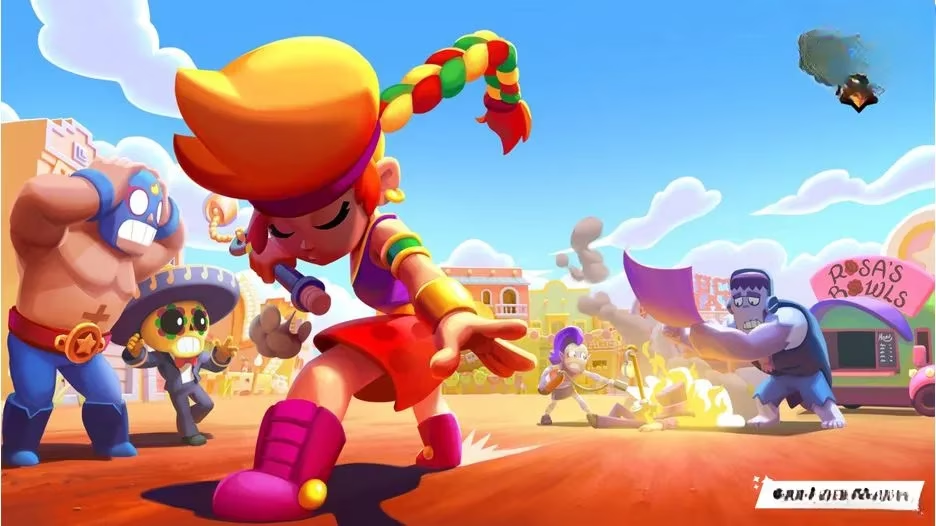
Brawl Stars is built on short, repeatable interactions. Players dash across several maps, cycle through modes, and spend hundreds of hours with the same characters. In that environment, a voice line is not decoration. It is the load-bearing wallpaper of the experience: players may not consciously study it, but when it peels, the whole room feels wrong. Supercell’s casting choices have generally avoided that failure. The actors behind the Brawlers give each character a distinct rhythm, from smug to feral to theatrical, and the result is a game that communicates personality before a single stat screen appears.
A Global Game Needs a Multilingual Cast
One detail I appreciate more in 2026 is how international Brawl Stars has become. The game is available worldwide, and many Brawlers speak different languages or carry accents that reflect a broader cast. That is not a small technical choice; it is a design statement. A Brawler’s voice is a tuning fork struck against the game’s metal spine, telling players how much weight the character carries before the first shot lands. When the localization and voice direction work together, a line that lasts less than two seconds can do the job of a biography.
I have been playing long enough to remember when the community treated voice lines as meme fodder. Now I see them as part of the game’s competitive readability. A well-acted line can signal a Super, a taunt, or a personality shift. It can make a loss feel theatrical and a comeback feel earned. The best performances are butter-smooth in the middle of chaos, which is exactly what the reference material praises: top-notch voiceover artists delivering clean work while the screen is full of effects.
What I Listen for in 2026
When I evaluate a Brawler’s vocal design, I use a simple checklist. It is not about celebrity casting; it is about fit.
| Voice pillar | What I hear in-game | Why it matters in 2026 |
|---|---|---|
| Character clarity | A line identifies the Brawler instantly | Faster recognition in crowded matches |
| Emotional range | Victory, defeat, and taunts feel distinct | Keeps long sessions from sounding flat |
| Cultural texture | Accents and languages feel intentional | Supports a worldwide player base |
| Replay tolerance | Short lines survive hundreds of repetitions | Protects the game’s long-term comfort |
| Competitive signal | Audio cues support map awareness | Helps players read action beyond visuals |
That table is also a warning. Casting a Brawler is like threading a needle while wearing boxing gloves: the margin between iconic and irritating is narrow. A voice that sounds charming in a trailer can become a splinter after fifty matches. Supercell’s team has generally understood this balance, and the actors deserve credit for making repetition feel like ritual rather than noise.
The Roster Keeps Moving
The 2024 community list that inspired my notes was already extensive, and it underlined how much research and emotion go into the game. The developers do not simply hire a voice and move on; they study the character, the fantasy, and the audience. By 2026, that process matters even more. Brawl Stars has a mature esports scene, and the competitive calendar has continued to build on the roadmap Supercell outlined for 2025. Even championship stories turn over quickly; the disbanding of HMBLE’s World Finals 2024 winning roster was a reminder that rosters, like Brawlers, are always in motion.
For me, the voice cast is the quiet continuity beneath that churn. New Brawlers arrive, balance changes reshape tiers, and maps rotate, but the game’s vocal personality keeps the world coherent. A tiny voice line can point players back to the character they chose. That is why I still pay attention to every new voice in 2026, and why I expect the list of actors behind Brawl Stars to keep growing.
The voice actors may not appear on the battlefield, but their work is present in every match. They give the Brawlers a pulse. In a game built on quick decisions and loud moments, that pulse is easy to overlook and impossible to replace. 🎮