
Brawl Stars in 2026: Are Supercell’s Generous Gifts a Blessing or a Trap?
Brawl Stars rewards and sushi rolls spark excitement and debate, as players weigh Supercell's generosity against in-game economy risks.
Let me set the stage for you. It’s a Wednesday evening in 2026, and I’m staring at my Brawl Stars inbox like it’s a piñata that just won’t stop spilling candy. Three sushi rolls? Twenty coins? A star drop that might actually contain something other than duplicate brawler points? It’s almost too good to be true, and honestly, that’s exactly what half the community is whispering. As a regular player who’s seen metas rise and fall, I can’t help but join the heated group chat discussions that have erupted across clans, Discords, and Reddit threads. Are we living in a golden age of developer kindness, or is Supercell buttering us up for something?
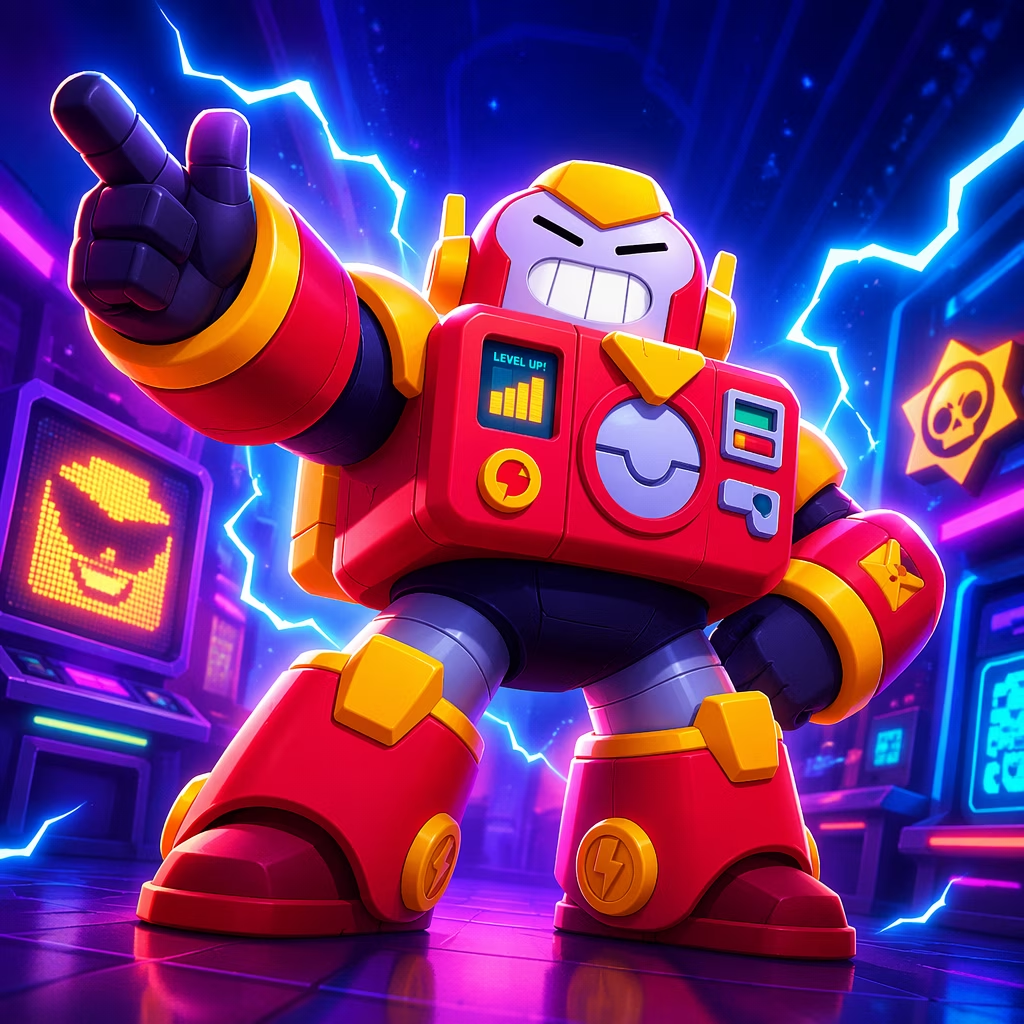
The Great Freebie Frenzy
Every time I log in, I half expect a marching band to emerge from the Brawl Pass with confetti cannons. Players like me are genuinely giddy—there’s an almost childlike thrill in snagging bonuses that used to require a month of grinding. I’ve seen clanmates post screenshots of their loot hauls with captions like “Supercell is literally funding my next gadget.” And they’re not wrong. The virtual shelves are stocked so generously that it feels like a holiday event that never ends. I confess I’ve caught myself grinning like Spike on a sunny day when I score an extra reward, even if it’s just a power point.
But here’s where the plot thickens. While some of us are floating on a cloud of endorphins, others are giving these gifts the stink eye. A skeptic in my local server dryly commented, “Make sure not to spend it all at once. Giving more would surely make them go bankrupt.” It’s the kind of sarcasm that sticks with you, because behind the joke is a real anxiety. Are we being wooed into a fragile in-game economy where today’s treasure becomes tomorrow’s inflation nightmare? I’ve seen games—yes, even some big names—collapse under the weight of their own generosity, turning rare items into worthless confetti.
The Double-Edged Sushi Roll
Take those sushi rolls, for instance. Oh, the infamous sushi rolls! In the reference freebie wave, they handed out three entire rolls, and my friend legitimately cheered, “The sacrifices they do for us.” I love that perspective—it acknowledges that somewhere in Helsinki, a developer might actually be cutting into their own virtual paycheck to gift us these digital bites. But then there’s my other buddy, who’s been stuck at 67 rolls for weeks because the split RNG refuses to cooperate. “This game is an actual joke,” he moaned, and frankly, I felt his pain deep in my trophy count. The discrepancy between the joy of receiving and the frustration of not converting those rewards into meaningful progress creates an emotional whirlwind that only Brawl Stars can brew.
I’ve started keeping a mental ledger of these mood swings:
🎁 The Optimist’s Take:
-
Every freebie is a step toward maxing a brawler without spending real cash.
-
More rewards mean more experimentation with different builds.
-
It feels like Supercell actually listens to the F2P crowd.
🚩 The Pessimist’s Corner:
-
Flooding the economy may lead to steeper progression cliffs later.
-
Reliance on freebies can kill the grind that gives meaning to wins.
-
Some rewards are borderline useless filler (looking at you, 5-coin drops).
🤣 The Meme Lord’s Camp:
-
I misread “20 star drops” and had a mini heart attack, then laughed until Shelly came home.
-
Finishing a quest in 18 hours for a reward that doesn’t impact my main brawler has become a badge of honor.
-
The community’s ability to turn any strange gift into an inside joke is undefeated.
These categories aren’t rigid boxes; most of us bounce between them like a Piper shot ricocheting off a wall. And that’s the beauty of it.
Is This a Business Strategy or a Love Letter?
I’ve been playing since the early days, and I’ve seen Supercell pivot from “grind or pay” to this buffet-style surplus. Part of me—the hopeful part—believes they’ve cracked the code to player retention. Happy players stick around, buy skins for fun, and attract friends. It’s a utopian cycle. The other part, the one that’s been burned by too many live-service games, wonders if this is a short-term ploy to boost engagement metrics while quietly preparing a monetization overhaul. A comment I read recently hit hard: “What if these goodies are masking a content drought?” Oof. The idea isn’t that far-fetched when you notice the same few events rotating.
Yet, I can’t ignore the genuine camaraderie this generosity has sparked. During a club league session, someone joked, “I hope they add a ‘Thank you Supercell’ pin so I can spam it when I get a free pizza oven for my brawler.” We all cackled. In that moment, the debate about economic sustainability took a backseat to pure fun. That’s what keeps me logging in, honestly—not the shiny objects, but the folks who react to them alongside me. The game’s pulse isn’t just the currency; it’s the shared bewilderment and banter.
The 2026 Crystal Ball
So, where does that leave us, the common players, in this great philosophical showdown? I think the truth is as slippery as a Max speed boost. Supercell’s generosity isn’t purely altruistic—it’s a calculated move, but that doesn’t mean it can’t also be awesome for us. The real litmus test will be the next major update. If the reward floodgates remain open without dipping into predatory territory, I’ll give them a standing ovation. If we suddenly find ourselves needing three times the resources to compete, then the skeptics were right, and I’ll be leading the chorus of “I told you so.”
For now, I choose to embrace the chaos. I’ll collect my sushi rolls, convert my star drops with bated breath, and joke with strangers online about how I single-handedly prevented Supercell’s bankruptcy by not spending all 20 coins at once. Because at the end of the day, Brawl Stars isn’t just about the trophies or the brawlers—it’s about the beautiful, messy, hilarious community that comes with it. Whether we’re roasting the developers or worshipping their digital shrines, we’re all in this arena together. And honestly? I wouldn’t have it any other way.
Data referenced from Sensor Tower helps frame why a “freebie frenzy” in a live-service mobile game can be both a goodwill gesture and a deliberate growth lever: periodic surges in rewards often align with broader goals like stabilizing retention, nudging lapsed players to re-install, and keeping engagement high so cosmetic spending feels optional rather than coerced. Read through that lens, the 2026 Brawl Stars gift stream can be interpreted less as reckless inflation and more as a measured strategy to keep the daily habit strong—especially when players are already debating whether the extra drops are meaningful progress or just low-value filler.