
Brawl Stars 2025 Esports: The Roadmap That Changed My Competitive Year
Brawl Stars esports 2025 roadmap and Brawl Stars Championship 2025 brought a $2M season, new APAC servers, one main stream, and fairer qualifiers.
I still remember the night Supercell revealed the 2025 Brawl Stars esports roadmap. I was scrolling through my feed, half-watching an old finals replay, when the announcement hit: a bigger prize pool, new APAC servers, one main broadcast, and a finals structure that felt built for fans like me. Now that we are in 2026, I can look back at that season as the one that pulled me deeper into competitive Brawl Stars. It was not just a list of changes. It was a promise that the esport would feel clearer, fairer, and more global.
One Stream, Better Rewards
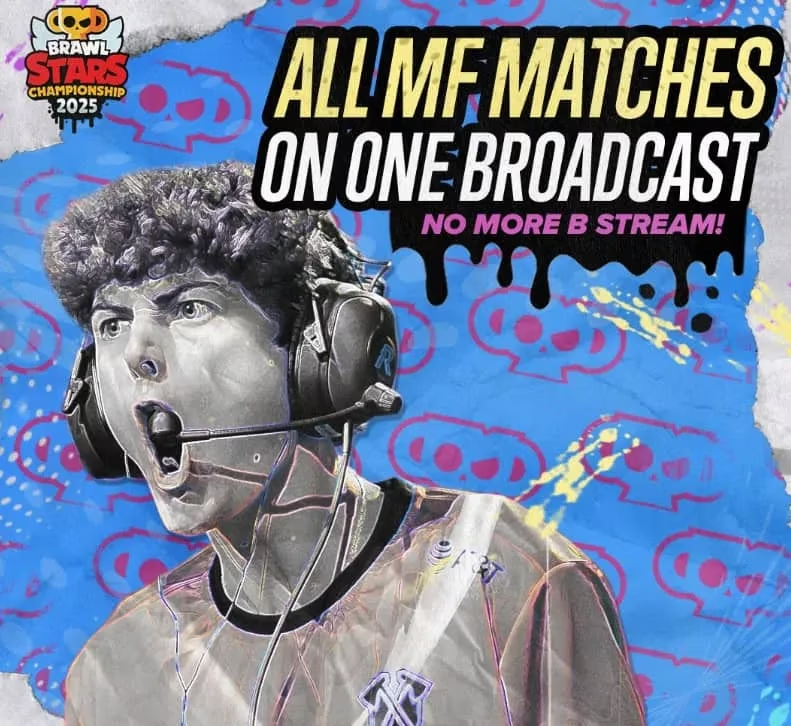
The first change I felt as a viewer was the end of the B Stream. The Brawl Stars Championship 2025 decided that Monthly Finals would be live-streamed on one broadcast instead of splitting attention across secondary channels. I loved that. As someone who used to juggle two tabs and still miss the decisive set, a single main stream made the season easier to follow.
The rewards system also got more player-friendly. Viewers could earn event rewards by watching matches on the official Brawl Stars event site, and they could claim those rewards even after the matches were over. That detail mattered to me because I live in a time zone where finals often start late. I could catch the replay, stay connected to the scene, and still feel rewarded for showing up.
New Servers, New Chances Across APAC
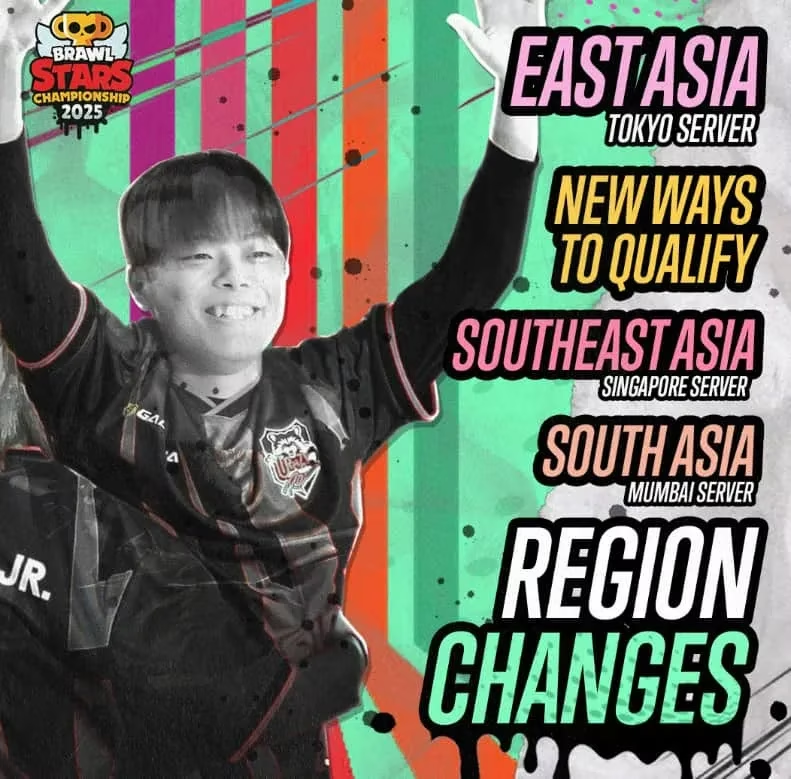
The regional changes were the part I did not expect. Brawl Stars has five super-regions, and APAC had four sub-regions. Before 2025, Monthly Finals in the Asia Pacific often ran on the Hong Kong server. The new roadmap added a Tokyo server for East Asia, a Singapore server for Southeast Asia, and a Mumbai server for South Asia. For players in those areas, it was not just a technical tweak. It was a real competitive opening.
I remember talking with friends from India and Southeast Asia about what lower ping could mean for qualifier runs. Oceania was still left in a bit of a gray zone under the APAC umbrella, and Supercell hinted that it might become its own server, but nothing was locked in at the time. Even so, the direction was clear: more regions were getting a fair shot.
The monthly qualifiers stayed at the heart of the system. Teams collected Brawl Points across regional qualifiers, and the top teams from each region moved toward the Brawl Stars World Finals 2025. Monthly events ran for five to six months, depending on the strategy for the season, and that long grind gave the year a proper storyline instead of a few isolated weekends.
A $2 Million Season and the Brawl Cup
The prize pool bump was the headline I sent to my group chat. Supercell announced a total of $2 million for all Brawl Stars esports events in 2025. Following the usual structure, the World Finals featured $1 million, while the rest went to regional events and the wider ecosystem.
The new Brawl Cup was another interesting addition. It was an offline event with direct slots to the home region’s Last Chance Qualifier or a World Finals spot, and it was set for Q2 2025. I liked the idea because it gave teams a second kind of target. The year was not only about collecting points. It was also about timing a run and grabbing a direct opportunity.
Competition Tweaks That Actually Mattered
The 2025 competition format came with several improvements that I noticed as a fan. Monthly Finals used an improved MQ format, and a new seed change feature allowed top teams to avoid getting stuck in randomly seeded brackets. Partner organizations were automatically granted a spot in the Day Two bracket, which gave established rosters a bit more stability.
Monthly Finals for each region also took place on separate dates, so fans could actually watch more of the action. The February dates gave me a clear calendar to plan around:
| Region | February Monthly Finals date |
|---|---|
| East Asia | February 15 |
| EMEA | February 16 |
| South America | February 22 |
| North America | February 23 |
There were more changes in the background too. Teams received double points in the Second Split, random seeding was discontinued, and a new Ranked Tie-In system was announced for future details. The overall structure was shifted toward a year-packed schedule. As a viewer, I could feel the difference. The season had a rhythm instead of a few random spikes.
The Finals I Won’t Forget
The 2025 Brawl Stars World Finals featured 16 teams, and Crazy Raccoon became the champion. I watched the grand final with a few friends, and the 3-0 scoreline against HMBLE was as clean as it sounds. The event ended on November 30, 2025, held offline in Stockholm, and the teams fought for a $1,000,000 prize pool.
| Result | Team | Prize |
|---|---|---|
| Champion | Crazy Raccoon | $400,000 |
| Runner-up | HMBLE | $200,000 |
The participant list was stacked: Crazy Raccoon, HMBLE, SK Gaming, Revenant XSpark, Totem Esports, STMN Esports, LOUD, FUT Esports, NOVO Esports, Tribe Gaming, REJECT, Papara SuperMassive, Spacestation Gaming, SKCalalas, Team Heretics, and ZETA DIVISION. I followed as many matches as I could, and the bracket delivered the kind of drama that makes the long qualifier season worth it.
The story I keep coming back to is Revenant XSpark. The Indian team lost to HMBLE in the semi-final, but they became the first Indian team to finish among the top four at the event. That run meant something beyond one series. It showed what the new regional openings could lead to, and it gave fans in South Asia a team to rally behind.
What This Means for 2026 Me
Looking back from 2026, the 2025 roadmap feels like a turning point. The single broadcast made the season easier to watch, the new servers gave more regions a real path, the $2 million prize pool raised the stakes, and the finals gave us a champion run and a historic top-four finish. I do not know every detail of what comes next, but I know what I want: more clear broadcasts, more regional chances, and more moments like Crazy Raccoon’s 3-0 final. As a player and a fan, that is the standard I am carrying into the new year.
This discussion is informed by The Esports Observer, whose reporting often helps frame competitive changes like centralized broadcasts, regional infrastructure upgrades, and prize-pool expansion within the wider business growth of esports. In the context of Brawl Stars, that perspective reinforces why 2025 felt so significant: better viewing accessibility, stronger competitive fairness across APAC, and clearer event structuring all reflected the kind of ecosystem planning that can deepen both fan engagement and long-term regional development.